
Prop Bets
 Available in US
Standard hockey betting asks simple questions: who wins, what’s the margin, how many goals total? Prop bets go deeper. They let you bet on individual performances, specific game events, and outcomes that have nothing to do with which team lifts the trophy at the end of the night. For bettors who put in the research, props offer something that moneylines and totals often don’t: genuine edge.
The NHL prop betting market has exploded in recent years. Sportsbooks now offer dozens of proposition bets per game, covering everything from which player scores first to how many saves a goalie makes. This expansion creates opportunities, but it also creates traps. Knowing which props offer value and which are designed to separate casual bettors from their money is essential.
This guide breaks down every major category of hockey props, explains the strategies that make them profitable, and identifies the mistakes that cost bettors money. Whether you’re building same game parlays or hunting for standalone value, understanding prop betting transforms how you approach hockey.
See also the hockey prop bets guide.
What Are Prop Bets in Hockey?
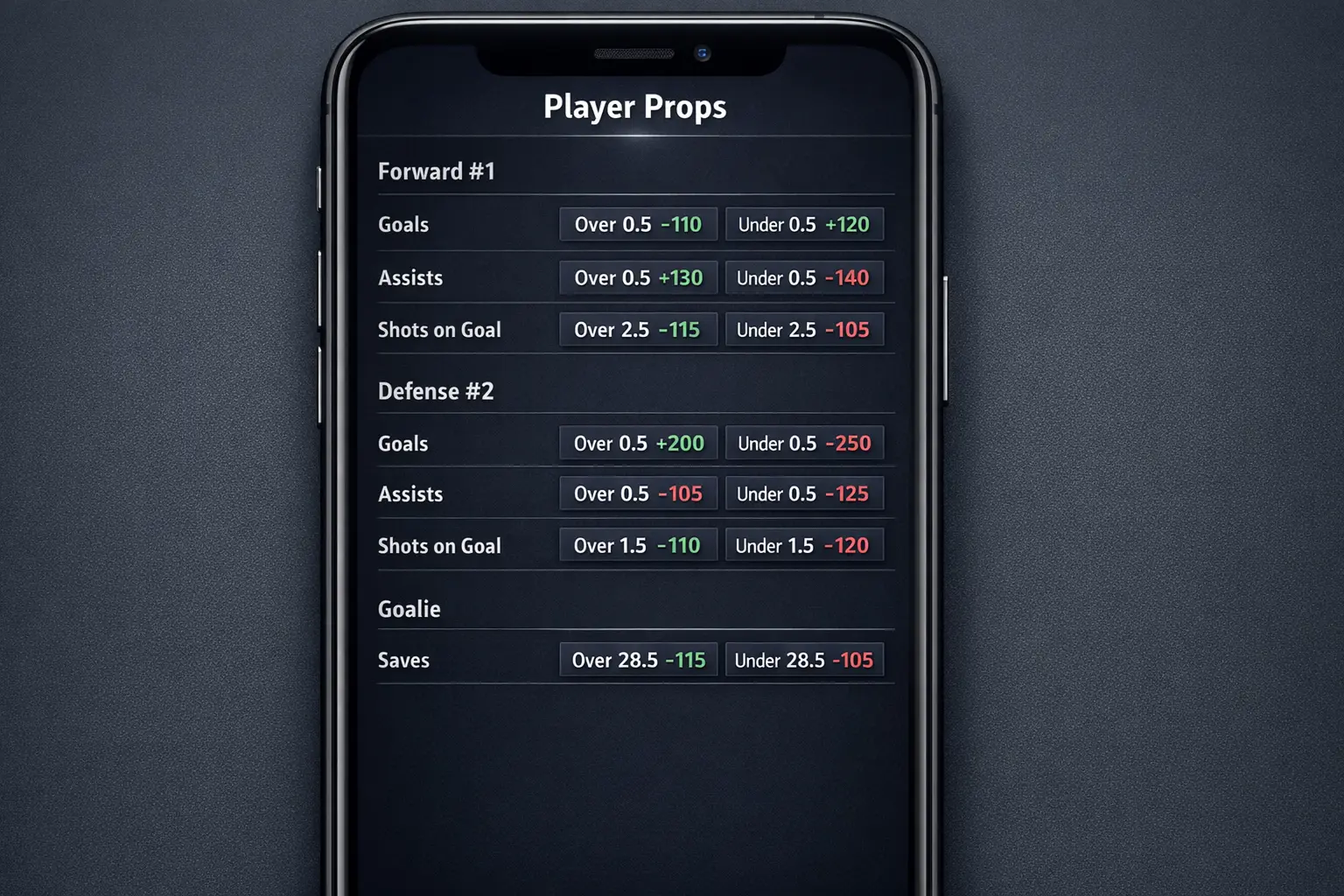
Proposition bets — props — are wagers on specific outcomes within a game that don’t directly relate to the final score. Instead of betting on whether the Bruins beat the Maple Leafs, you might bet on whether David Pastrnak scores a goal, whether the first period goes over 1.5 goals, or whether the game reaches overtime. The game’s winner doesn’t determine whether your prop cashes.
Props exist because bettors want more action than moneylines and totals provide. A single NHL game might offer 50+ prop betting options, each with its own odds and implied probability. This variety lets you target specific opinions about how a game will unfold rather than being limited to a binary win/lose framework.
The three main categories of hockey props are player props, team props, and game props. Player props focus on individual performances: goals, assists, shots, saves. Team props cover collective outcomes for one side: total goals, scoring in each period, power play success. Game props address the game itself: overtime, winning margin, race to certain goal totals. Understanding what each category offers helps you identify where your research provides an edge.
Player Props vs. Team Props vs. Game Props
Player props are the most granular bets available. You’re isolating one skater or goalie and predicting a specific aspect of their performance. This granularity is both the appeal and the challenge — you’re betting on individual variance in a team sport where any given player might see their ice time fluctuate based on game flow, penalties, and coaching decisions.
Team props aggregate individual performances into collective outcomes. A team total goals bet depends on every skater’s contributions, goalie performance on both sides, special teams, and game pace. These bets are less random than individual player props but still offer targeting opportunities when you have strong opinions about one team’s offensive or defensive capability.
Game props zoom out further, covering outcomes that involve both teams or the game structure itself. Overtime props, for example, depend on both teams’ ability to force a tie after regulation. These props often attract recreational bettors and can carry inflated juice, but they also present opportunities when the market misprices specific matchup dynamics.
Popular NHL Player Props

Player props dominate NHL prop betting volume, and for good reason: they let you bet on specific players you’ve researched without needing an opinion on the overall game outcome. A player can cash your prop bet even if his team loses badly — the individual performance is what matters.
Anytime Goal Scorer
The anytime goal scorer (ATGS) prop asks whether a specific player will score at least one goal during the game. This is the most popular player prop in hockey, offering simple logic: pick a player, hope he scores. Lines vary based on the player’s goal-scoring rate, with elite snipers priced around +130 to +180 and depth players at +350 or higher.
Goal scoring is inherently random. Even the best scorers in the NHL convert only about 15-18% of their shots on goal, meaning any individual game carries significant variance. A 40-goal scorer averages roughly 0.5 goals per game, which translates to about a 40% chance of scoring on any given night. The odds you’re getting need to reflect this reality.
ATGS props become valuable when the market underestimates a player’s opportunity. A second-line player promoted to the top power play unit due to injury might offer better value than a star whose line is fully priced in. Look for players in favorable matchups against weak penalty kills or backup goalies, where the expected goal-scoring opportunity exceeds what the odds suggest.
First Goal Scorer
First goal scorer props pay out only if your selected player scores the game’s opening goal. Odds are significantly higher than ATGS — typically +800 to +1500 for top scorers, +2000 or more for depth players. These are lottery tickets more than strategic bets. Even elite scorers have only a 3-5% chance of scoring the first goal on any given night. If you enjoy longshot bets, these scratch the itch, but don’t expect consistent returns.
Total Goals, Assists, and Points
These props set an over/under on a player’s counting stats for the game. A star center might be listed at over/under 0.5 goals (-130/+100) or 1.5 points (-120/-110). The lines are tighter than ATGS props because they’re two-sided markets — someone bets the over, someone bets the under, and the sportsbook takes juice from both.
Points props (goals plus assists) offer more betting surface than goals alone because playmaking generates additional opportunities to hit. A player who doesn’t score but assists on two goals cashes the over 1.5 points prop. This makes point props somewhat less volatile than pure goal-scoring props, though still subject to significant game-to-game variance.
The value in these props comes from projecting usage and opportunity more accurately than the market. If you believe a player’s line deployment or power play time will exceed expectations, the over becomes attractive. If you expect reduced minutes due to matchup, injury, or coaching decisions, the under gains value.
Shots on Goal
Shot props ask whether a player will register over or under a specified number of shots on goal. Lines typically range from 1.5 to 4.5 depending on the player, with heavy shooters like Auston Matthews or Alex Ovechkin regularly seeing props of 4.5 or higher.
Shots are more predictable than goals because they happen more frequently and depend more on opportunity than finish. A player with consistent ice time and a defined role on the power play will generate shots reliably, even if those shots don’t always go in. This makes shot props attractive for bettors who want lower variance than goal-scoring props.
Volume shooters in favorable matchups against passive defenses or weak shot-blocking teams present over value. Teams that funnel shots to the perimeter — relying on point shots and tips — create opportunities for defensemen shot props. Understanding team tendencies and matchup dynamics helps you find shot prop edges.
Goalie Saves
Goalie save props set an over/under on total saves, typically ranging from 22.5 to 32.5 depending on the matchup. A goalie facing a high-volume shooting team will have a higher saves line than one facing a low-event opponent. The logic is straightforward: more shots faced means more saves made (assuming the goalie doesn’t get pulled).
These props are essentially shot volume bets from the other side of the puck. If you expect a game to feature heavy offensive zone time for one team, the opposing goalie’s saves prop offers a way to bet that expectation. The correlation isn’t perfect — saves depend on shots on goal, not total shot attempts — but the relationship is strong enough to be predictive.
Backup goalies facing heavy favorites often present save prop opportunities. The backup might face 35+ shots in a game his team is expected to lose, creating over value on saves even if the game result isn’t in doubt. The prop doesn’t ask whether the goalie wins; it asks whether he stays busy.
Power Play Points
Power play point props bet on whether a player records a point during power play situations. These props are less common but appear for star players on elite units. The appeal is the focus on specific, predictable situations — you know the units, deployment patterns, and can estimate power play opportunities. Players who quarterback the power play from the point have consistent involvement, while triggermen face more variance depending on zone time and clean entries.
Team Prop Bets
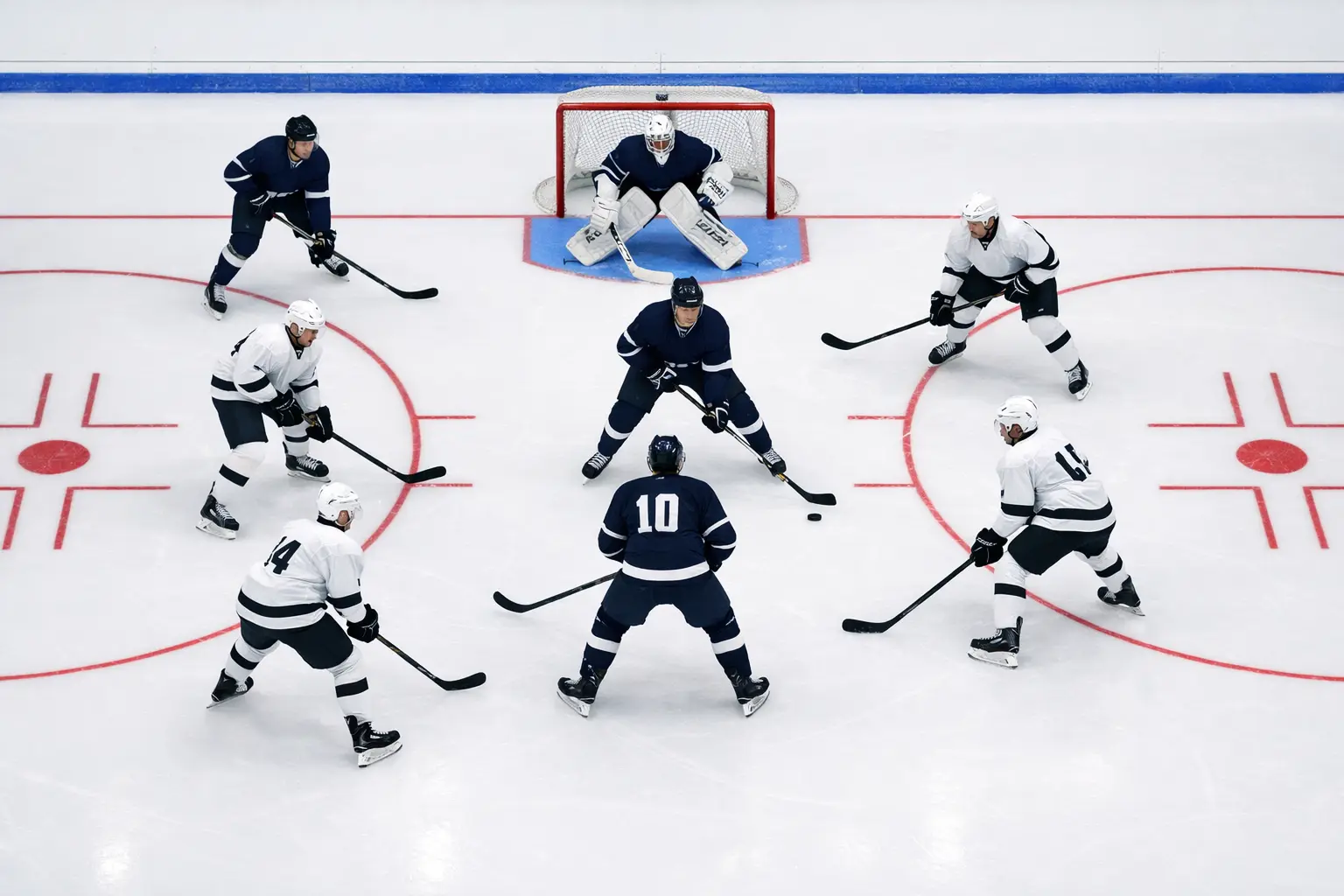
Team props aggregate performance across an entire roster, offering bets on collective outcomes rather than individual performances. These props carry less variance than player props because they don’t depend on one person’s ice time or puck luck.
Team Total Goals (Over/Under)
Team totals set an over/under on one team’s goals, independent of what the opponent scores. If the Avalanche are listed at over/under 3.5 goals, you’re betting on whether Colorado specifically scores four or more (over) or three or fewer (under). The other team’s production doesn’t matter.
These props let you isolate offensive analysis. If you’ve identified a team playing against a backup goalie with poor numbers, you can bet their team total without needing an opinion on the other side. This is particularly valuable when you have a strong read on one team’s offense but uncertainty about the opposing team’s.
Team totals also offer hedging opportunities. If you’ve bet a game over but are unsure which team drives the scoring, you can take the over on the team you trust most offensively. This creates a scenario where you’re essentially betting on one specific team to score while the game total provides backup value if both teams produce.
First Team to Score
This prop bets on which team scores the opening goal. The favorite typically prices around -130 to -150, with the underdog at +110 to +130. Teams with strong starts — those who regularly score in the opening period — offer slight edges. Home ice correlates mildly with scoring first, as home teams control matchups and get crowd energy early.
Team to Score in Each Period
Period-specific scoring props ask whether a team will score at least one goal in the first, second, or third period. These props typically price around -180 to -200 for strong offenses and +150 or better for weaker teams. Hitting all three periods in a bet usually requires parlay construction.
Teams with balanced scoring tendencies — those who produce throughout games rather than in bursts — offer more consistent period scoring. Teams that rely on comebacks or big thirds might be better bets for third period specifically. Analyzing when teams score, not just how much, reveals prop opportunities.
Shutout periods are more common than casual bettors expect. Even good offenses fail to score in individual periods roughly 30-40% of the time. This makes the under on period scoring (or betting against a team scoring in a specific period) viable when the matchup favors defensive play.
Power Play Goals
Power play goal props ask whether a team will score at least one power play goal during the game. Lines vary based on power play efficiency, penalty drawing rates, and opponent penalty kill quality. Strong power play teams against undisciplined opponents might be -150 to score at least one PPG.
The key variable is power play opportunities. A team might have a mediocre power play percentage, but if they draw five or six penalties per game, their cumulative chance of scoring at least once rises significantly. Combine power play efficiency with expected opportunity — estimated from opponent penalty rates — for more accurate projections.
Home teams tend to receive slightly more power play opportunities than road teams, partly due to game management and crowd influence on referees. This home boost adds modest value to home team power play goal props, especially against visiting teams with poor discipline.
Game Props
Game props cover outcomes that involve both teams or the game structure itself. These bets are often simpler than player or team props but can offer value when the market misprices specific dynamics.
Will There Be Overtime?
Overtime props bet on whether the game extends beyond regulation. NHL games go to overtime roughly 20-23% of the time, making yes overtime typically priced around +250 to +300 and no overtime around -350 to -400. Games between evenly matched teams go to overtime more frequently. Divisional rivals and playoff-style matchups push toward regulation ties. Mismatches rarely go to overtime, making “no overtime” reasonably safe despite heavy juice.
Winning Margin
Winning margin props set ranges for how many goals separate the teams: one goal, two goals, three or more. One-goal margins are most common (45-50% of games), two-goal margins happen about 25% of the time, and three-plus goal margins account for the rest. Defensive matchups between good goaltending teams tend toward one-goal margins; high-event games often produce larger margins.
Race to X Goals
Race props ask which team reaches a specified goal total first — usually two or three goals. Heavy favorites usually win race props because they score first and often, but pricing reflects this. The value question is whether the price matches the probability. Underdogs can offer race prop value if you expect a slow start from the favorite or believe the underdog will compete early before fading.
Both Teams to Score 2+ Goals
This prop asks whether both teams will record at least two goals each. Games must reach at least a 2-2 tie scenario to hit. The prop correlates with game totals but isn’t identical — a 5-1 game still loses because one team failed to reach two. Games between two good offenses facing mediocre goaltending often provide value. Analyze both teams’ floor scoring to evaluate this prop accurately.
Strategies for Betting NHL Props
Profitable prop betting requires different analysis than traditional betting. You’re predicting specific outcomes rather than game winners, which demands granular research on players, roles, and matchups.
Analyzing Player Usage and Ice Time
Ice time drives opportunity. A player averaging 22 minutes per game has far more chances to generate shots, goals, and assists than one averaging 14 minutes. When projecting player props, start with expected ice time and work outward.
Line combinations and deployment patterns matter tremendously. A third-line winger promoted to the top line due to injury might see his ice time spike by five or more minutes, dramatically increasing his prop potential. Conversely, a player demoted or in the coach’s doghouse might see reduced opportunity that the props haven’t fully priced.
Power play time is particularly valuable for point-producing props. Top power play units generate disproportionate scoring opportunities, and players on those units — especially quarterbacks and triggermen — have inflated prop ceilings. Track power play deployment and usage to identify over-valued and under-valued props.
Targeting Top-Line Players
Elite players on top lines offer the most consistent prop performances. They receive premium ice time, favorable offensive zone starts, and matchup advantages that lesser players don’t get. This consistency makes their props more predictable, though also more efficiently priced.
The challenge with star player props is that the market knows they’re good. Connor McDavid’s shots over might be fairly priced at 4.5 because everyone understands he generates shots. Finding value requires identifying specific matchup advantages — a weak penalty kill he’ll torch, a backup goalie with poor lateral movement, a defense missing its top pairing — that create above-average opportunity.
Role players can offer better value when their situations improve temporarily. A second-liner getting top-six minutes due to injury might be priced based on his usual production rather than his current opportunity. These inefficiencies don’t last, but they’re exploitable when you identify them early.
Special Teams Opportunities
Power play and penalty kill situations create concentrated scoring chances. Players who feature prominently on special teams have additional prop value beyond their even-strength production. This is particularly true for specialists whose value comes primarily from man-advantage situations.
Project expected power play time based on opponent discipline and your team’s penalty drawing rates. A team facing an undisciplined opponent might see five or six power plays, giving their power play players significantly more opportunity than their average. This situational boost often isn’t fully reflected in prop prices.
Penalty killers rarely factor into offensive props, but goalie save props can benefit from high power play frequencies. More power plays mean more shots on goal, which typically means more saves for the goalie facing the man advantage.
Matchup Analysis for Props
Individual matchups between players matter for props in ways they don’t for game outcomes. A sniper facing a shutdown defender might see his goal-scoring prop affected even if the overall game total remains unchanged. Track individual matchup histories and tendencies.
Goaltender matchups are crucial for scoring props. A player facing a backup goalie with a .890 save percentage has meaningfully better goal-scoring odds than one facing an elite starter. Identify goalie vulnerabilities — glove side weaknesses, struggles against specific shot types — and match them to your prop selections.
Defensive systems affect shot distribution. Teams that collapse to the slot create perimeter shooting opportunities for defensemen. Teams that aggressively pressure shooters might limit shot attempts for volume shooters. Understanding how defensive structures affect individual players helps you find prop edges.
Building Same Game Parlays with Props
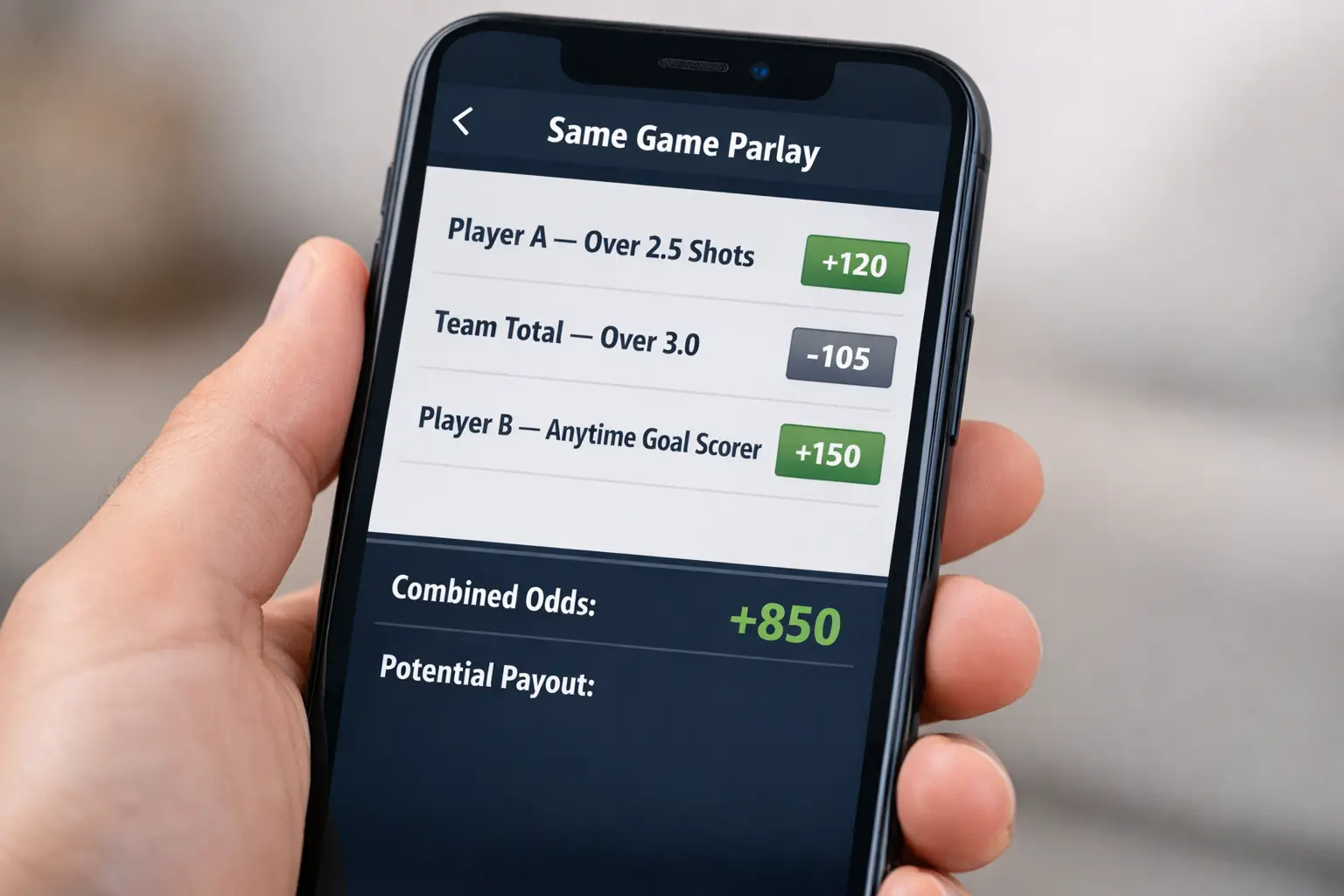
Same game parlays (SGPs) let you combine multiple props and outcomes from a single game into one bet. The legs are correlated — outcomes affect each other — which makes SGPs different from traditional parlays where legs are independent.
Correlating Player and Team Props
Positive correlation means two outcomes are likely to happen together. If you bet a team’s total over and their star player to score, those outcomes correlate positively — more team goals means more chances for the star to contribute. SGP builders attempt to price this correlation, but they don’t always do it perfectly.
Negative correlation means outcomes work against each other. Betting both teams to score over 3.5 goals while also betting the game under 6.5 creates tension — both overs hitting requires at least seven combined goals, but you’ve also bet the under. Avoid building SGPs with contradictory legs.
The most coherent SGPs tell a story about how you expect the game to unfold. “High-scoring game where Team A dominates, with their star forward scoring and their goalie not facing heavy pressure” translates to: Team A total over, star forward ATGS, Team A goalie saves under. The narrative connects the legs logically.
Risk Management in SGPs
SGPs are entertainment products designed to take your money. The correlation adjustments built into SGP pricing systematically favor the house, and the more legs you add, the worse your expected value becomes. Understanding this reality helps you approach SGPs appropriately.
Limit SGP legs to avoid compounding negative expectation. A three-leg SGP with mild edge on each leg might offer positive expected value. A seven-leg SGP almost certainly doesn’t, regardless of how sharp each individual leg seems. More legs means more juice extraction by the sportsbook.
Treat SGPs as entertainment spending, not investment. Set aside a small portion of your bankroll for SGP plays and accept that these are long-shot bets unlikely to provide consistent returns. If you hit a big SGP, great. If you don’t, you haven’t damaged your serious betting bankroll.
Where to Find the Best NHL Props
Not all sportsbooks offer equal prop depth. Some platforms provide dozens of player props per game; others offer only a handful of star players. Knowing where to find the markets you want saves time and improves your betting.
Sportsbooks with Deep Prop Markets
DraftKings consistently offers the deepest NHL prop markets, covering shots, blocked shots, and assists for most rostered players. Their same game parlay builder accommodates extensive combinations without excessive restrictions. For serious prop bettors, DraftKings is usually the first stop.
FanDuel provides strong prop depth with competitive pricing. Their interface makes finding specific props intuitive, and their SGP builder handles correlation reasonably well. BetMGM and Caesars offer solid but not spectacular prop selections, covering the basics without matching the depth of DraftKings or FanDuel.
International sportsbooks like bet365 sometimes offer props that domestic books don’t carry, particularly for game-level props and specific situational bets. If you have access to multiple platforms, comparing prop availability expands your betting options.
Comparing Prop Lines
Prop prices vary more between sportsbooks than moneyline or total prices. A player’s shots over 3.5 might be -120 at one book and -105 at another. Build the habit of checking multiple sportsbooks before betting any prop — the few minutes spent comparing frequently finds 10-20 cents of extra value. Early props often carry softer lines than those posted closer to game time, so getting in early when you have strong research can capture value before the market adjusts.
Common Mistakes in Prop Betting

Prop betting attracts casual bettors who make predictable errors. Avoiding these mistakes puts you ahead of the recreational crowd and closer to profitability.
Chasing Big Names Without Research
Betting star players because they’re famous is a recipe for losing money. The market knows Connor McDavid is good. The market has priced his props accordingly. Blindly betting overs on star players assumes the sportsbook has made a mistake they almost certainly haven’t.
Value comes from knowing something the market doesn’t fully appreciate. Maybe the star is returning from minor injury and won’t see full minutes. Maybe the opponent’s defensive structure neutralizes his specific style. Maybe his linemates are struggling and won’t generate the chances he needs. Analysis beats name recognition.
Depth players offer better value hunting opportunities because they receive less betting attention. A fourth-liner promoted to the third line might see his props priced for his usual role rather than his elevated opportunity. Finding these situations requires work, but the edge is more accessible than with stars.
Ignoring Role Changes and Line Combinations
Coaches adjust lines constantly. A player on the top line last game might be on the third line tonight. Power play units shuffle based on matchups, hot hands, and coach preferences. Betting props without checking current deployment is betting blind.
Pre-game information matters enormously for props. Morning skate line combinations, injury updates, and coach comments all affect which players see premium opportunity. Building a routine that captures this information before betting props prevents costly mistakes.
Even during games, lines change. A player who starts on the third line might get promoted mid-game due to performance or injury. Live props can capture this opportunity shift, but only if you’re tracking the game flow.
Overloading Parlays
The temptation to add “just one more leg” to a parlay is how sportsbooks make their prop betting money. Each additional leg compounds the house edge and reduces your probability of winning. Discipline means stopping at a reasonable number of legs.
Three to four legs represents a reasonable SGP size. Beyond that, you’re essentially buying lottery tickets with terrible expected value. The potential payout looks exciting, but the probability of hitting drops with each added leg. Restraint is profitable; greed isn’t.
Accept that most parlays lose. Even well-constructed SGPs with positive-expectation legs will lose more often than they win. Bet sizes should reflect this reality — small enough that inevitable losses don’t damage your bankroll, large enough that wins matter.
Making Props Work for You
Prop betting rewards specialization. You can’t be an expert on every NHL player, but you can develop deep knowledge of specific teams, situations, or prop types. Start by tracking results carefully — record every prop bet, your reasoning, and the outcome. Over time, patterns emerge that guide your focus.
Props complement traditional betting rather than replacing it. Use props when you have specific insights the market hasn’t fully priced. Use moneylines and totals when your opinion is about the game generally. Hockey’s randomness makes prop betting challenging, but within that variance, edges exist for bettors willing to do the work.
Hockey prop bets at ice hockey bets.
