
Live Betting
 Available in US
Pre-game betting is a prediction game. You analyze matchups, check goalie confirmations, evaluate recent form, and make your best guess about what will happen. Live betting is different. You’re not predicting anymore — you’re reacting to what’s actually unfolding on the ice, finding spots where the market hasn’t caught up to reality.
Hockey is uniquely suited to live betting. The sport moves fast, momentum shifts are real and visible, and individual events like goals and penalties create immediate, dramatic odds changes. A team down 2-0 after the first period might be priced at +350 when they were -150 pre-game. If you believe that early deficit doesn’t reflect true game state — maybe they dominated possession but hit posts, maybe the opponent’s goalie is due to regress — live betting lets you act on that belief at inflated odds.
This guide breaks down how live betting works in hockey, when to place bets during games, the strategies that find value in real-time markets, and the discipline required to avoid the traps that catch emotional bettors. Live betting rewards preparation and patience. The bettors who profit aren’t the ones mashing buttons after every goal — they’re the ones who wait for the market to misprice situations they understand.
See also in-play strategies and tips.
What is Live Betting in Hockey?
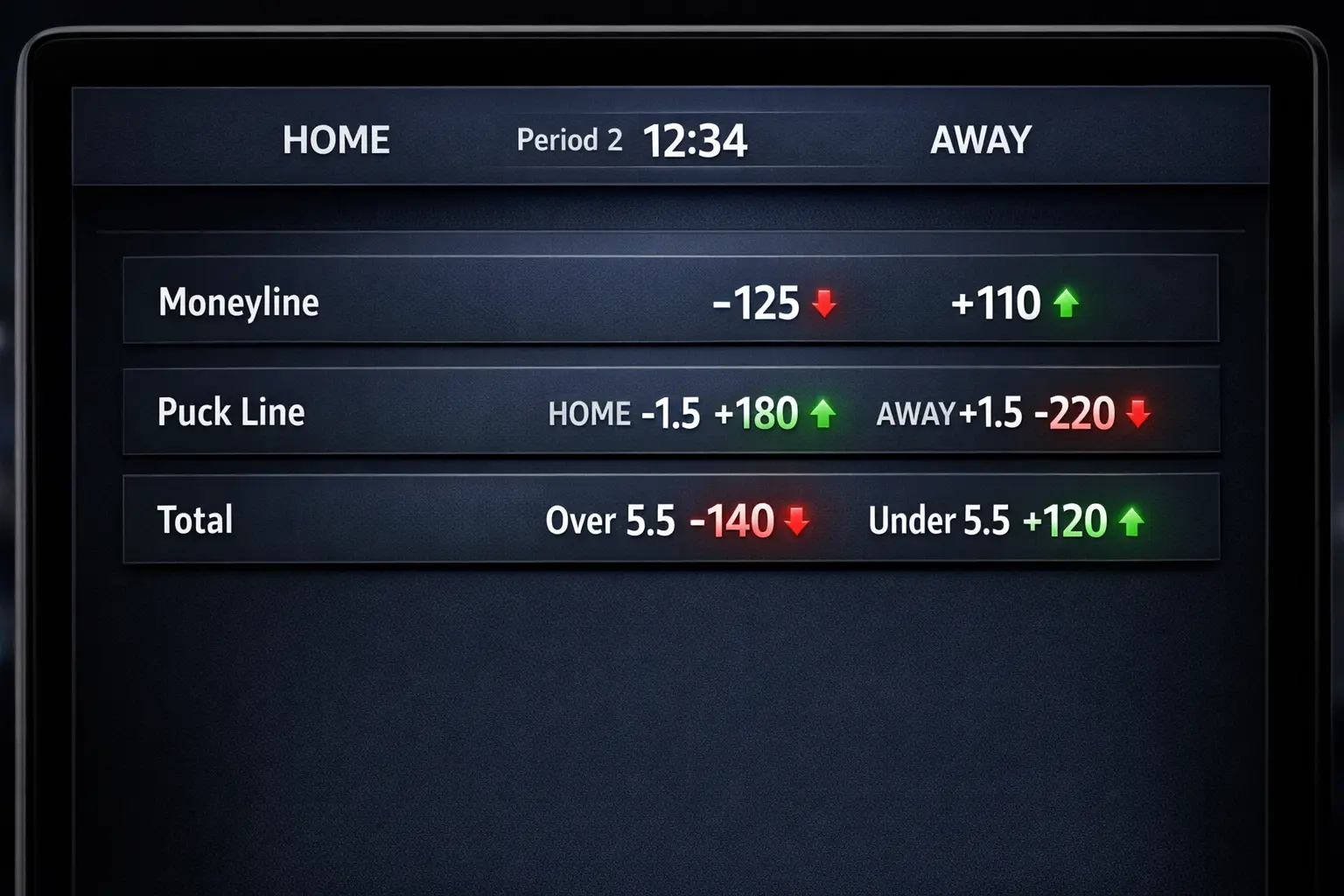
Live betting — also called in-play or in-game betting — allows you to place wagers on hockey games while they’re being played. Instead of locking in your position before puck drop, you can bet throughout all three periods, during intermissions, and even into overtime. The odds update continuously based on game events, creating a dynamic market that differs fundamentally from pre-game betting.
When a game starts, the pre-game lines close and live lines open. These initial live lines typically mirror the closing pre-game odds, but they begin shifting immediately as the game unfolds. A goal changes the moneyline significantly. A penalty creates temporary odds adjustments. Even sustained offensive pressure without scoring can nudge the lines as the market prices in momentum.
The mechanics are straightforward: you select a live market, see the current odds, and place your bet. The complexity comes from speed. Odds can change between when you view them and when your bet is accepted. Most sportsbooks show you the current price and ask you to confirm, but rapid game events might cause your bet to be rejected or re-priced. This is normal in live betting and reflects the challenge of pricing a moving target.
Real-Time Odds Updates
Sportsbooks employ traders who watch games and adjust odds based on events. Goals and penalties trigger immediate updates; subtler factors like shot volume and zone time influence gradual adjustments. The best sportsbooks update lines within seconds of significant events; slower platforms might lag by 30 seconds or more.
This speed differential matters for understanding live betting opportunities. If you see a goal scored, the sportsbook has already updated its odds by the time you navigate to the betting screen. The opportunity in live betting isn’t exploiting information lag — it’s identifying mispriced reactions to events the market has already incorporated.
Markets Available During Games
Most standard betting markets remain available live, though odds change dramatically from pre-game levels. Moneylines, puck lines, totals, and period bets all have live equivalents. Some prop markets close once the game starts, while others — like next goal scorer — exist specifically for live betting. Market depth varies by sportsbook and game importance; nationally televised playoff games offer more options than midweek games between bottom-feeders.
Why Live Betting Works for Hockey

Hockey’s characteristics make it particularly suitable for live betting. The sport’s pace, volatility, and structure create opportunities that don’t exist in slower games. Understanding why live hockey betting works helps you identify where to focus your attention.
Fast-Paced Game with Momentum Swings
Hockey momentum is real in a way that matters for betting. A team that dominates a ten-minute stretch — outshooting their opponent, generating scoring chances, pinning them in the defensive zone — often sees that pressure eventually convert to goals. The live market might not fully price this momentum, especially if the score hasn’t changed yet.
Conversely, teams that start slowly sometimes find their rhythm later in games. A squad that looks lost for the first period might settle down during intermission, make adjustments, and play significantly better afterward. If the market has overreacted to early struggles, live betting offers a chance to buy low.
The key is distinguishing real momentum from noise. Hockey is random enough that a team can dominate shot attempts and still trail due to puck luck. Watching the game — not just the score — helps you identify when the market has overpriced or underpriced a team based on results that don’t match performance.
Goals Change Odds Dramatically
A single goal in hockey swings the moneyline more than a touchdown in football or a run in baseball. This is because hockey is low-scoring and goals are rare. When a team goes from 0-0 to 1-0, their win probability increases substantially, and the odds reflect that immediately.
This volatility creates opportunity. Markets sometimes overreact to goals, especially early ones. A team scoring first doesn’t guarantee victory — roughly 30-34% of teams that allow the first goal still win or force overtime. If the first goal came against the run of play, the market might have overcorrected, making the trailing team a live value.
Empty net situations near the end of games create massive odds swings. A team leading by one with their opponent’s goalie pulled might be -800 or steeper to win. The empty netter goal potential makes this pricing reasonable, but it also creates opportunities for savvy bettors who understand the true probabilities of empty net conversions and late comebacks.
Penalties and Power Plays Create Opportunities
When a penalty is called, the market immediately adjusts to reflect the power play. The team going on the advantage sees their odds improve; the team killing the penalty sees theirs worsen. These adjustments happen in real-time, creating a window where you can bet on the power play outcome.
Power play success rates vary significantly between teams, but the average NHL power play converts around 20-22% of the time. Markets typically price the power play appropriately in aggregate, but individual matchups create edges. A top-five power play against a bottom-five penalty kill might be underpriced relative to the true conversion probability.
The reverse also applies. If a team with a strong penalty kill draws a penalty against a weak power play, the odds adjustment might be excessive. Live betting lets you take advantage of these specific matchup dynamics that generic pre-game odds don’t capture.
Key Live Betting Markets
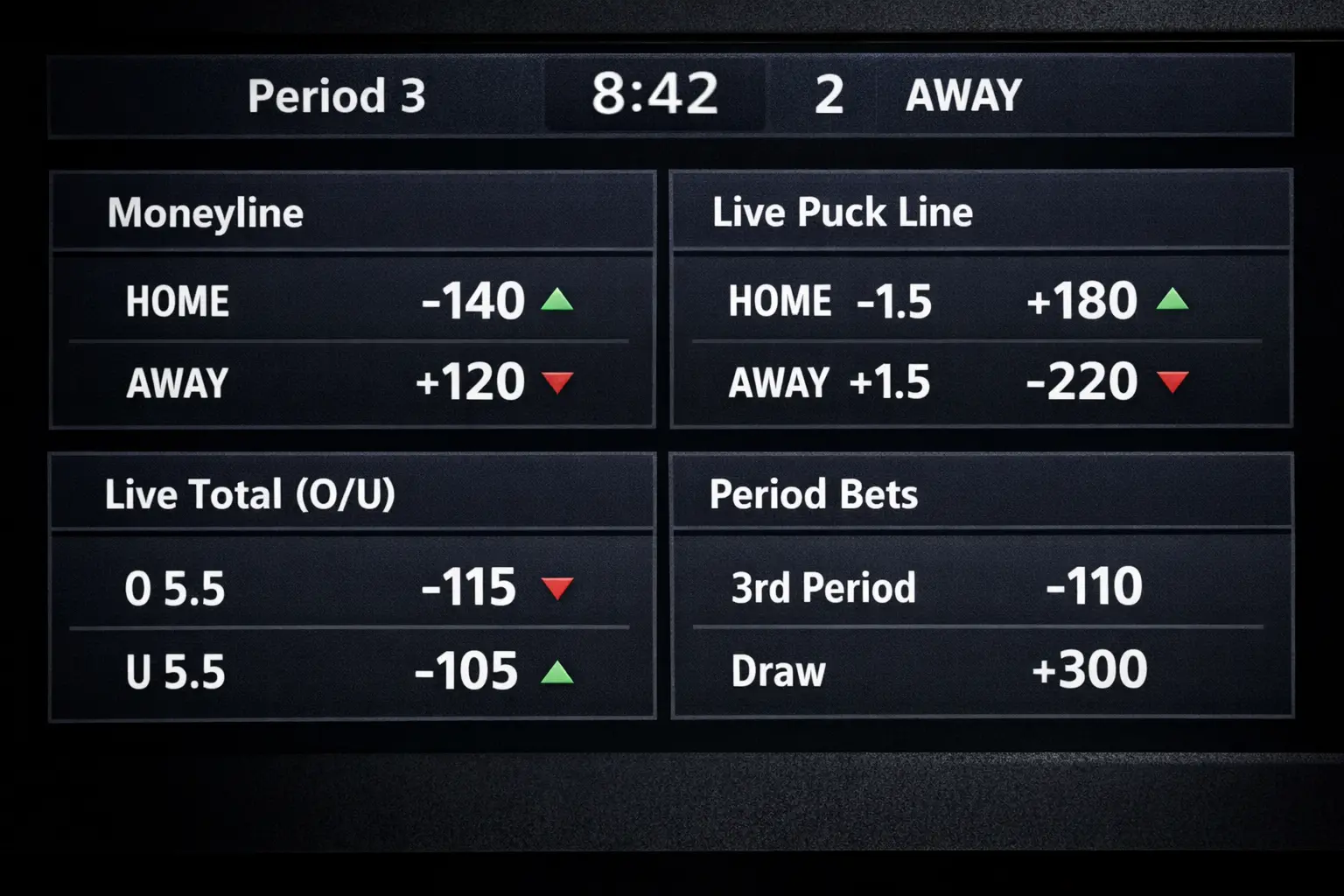
Different live markets serve different purposes. Some track the same outcomes as pre-game bets but at updated prices; others exist specifically for in-game wagering. Knowing what’s available helps you find the right bet for your live read.
Live Moneyline
The live moneyline works exactly like the pre-game version: pick the winner. The difference is pricing. A team that was -140 pre-game might be +180 if they’re trailing by a goal, or -250 if they’re leading. These prices update constantly as the game unfolds, reflecting current win probability based on score, time remaining, and game flow.
Live moneylines offer the purest expression of live betting. You’re not betting on margins or totals — just who wins. This simplicity makes it easier to evaluate whether you’re getting a good price. If you believe a trailing team has better than a 30% chance to come back and they’re priced at +250 (28.6% implied probability), you’ve found value.
The challenge is separating what you want to believe from what’s actually true. It’s easy to convince yourself that your favorite team, down 2-0, is about to mount a comeback. The market is usually more accurate than your hopes. Live moneyline value comes from situations where you genuinely know something the market doesn’t fully appreciate.
Live Puck Line
The live puck line maintains the 1.5-goal spread but adjusts odds based on current score. If a team is leading 2-0, their -1.5 becomes much cheaper because they’ve already covered. Live puck lines get interesting in close games late — a team leading 2-1 might see their -1.5 at plus money, cashing only if they add an empty netter.
Trailing teams on the live +1.5 offer value when you believe they’ll make it close without necessarily winning. A team down 2-0 but dominating play might find the +1.5 attractive — they just need to get one back.
Next Goal Scorer
Next goal scorer props let you bet on which player scores the game’s next goal. The odds reflect both the player’s scoring likelihood and his current opportunity — a star center on the power play will be priced shorter than a fourth-liner on the bench. These props are inherently high-variance but offer a way to target specific situations you believe are underpriced.
Period Betting In-Play
Period betting continues throughout the game, with separate lines for each period. Intermission betting — wagering during breaks — gives you time to assess what you’ve seen. Teams that dominated the first period might see second period unders as opponents adjust; teams that started slowly might offer value on their period moneyline if you expect improvement. Period totals often provide cleaner value than game totals when you believe pace is about to change.
Updated Totals
Game totals adjust based on goals scored and time remaining. A game that opened at 6.0 might show a live total of 3.5 entering the third if only two goals have been scored. Live totals create opportunities when game pace doesn’t match the current total — a 1-1 game with heavy shot volume might offer over value, while a 3-2 game where both goalies have settled might offer under value.
When to Place Live Hockey Bets
Timing matters in live betting. The best opportunities arise at specific moments when the market is most likely to misprice the situation. Knowing when to bet — and when to wait — separates profitable live bettors from those who bet every shift change.
After Early Goals (Overreactions)
The first goal of a hockey game shifts the market significantly, sometimes more than the actual impact on win probability warrants. If a team scores a fluky goal — a weird bounce, a deflection, a screened shot that trickled in — the market adjusts as if they earned a goal through dominant play. This creates value on the team that allowed the goal.
Watch how goals are scored, not just that they’re scored. A team that gives up the first goal but is controlling play, generating chances, and limiting the opponent to low-danger shots is a better team than the score suggests. The live odds might not fully reflect this underlying strength.
The key is quick evaluation. You have seconds to minutes before the market settles into its new equilibrium. If you recognize an overreaction, act decisively. If you’re uncertain whether the goal changes your view of the game, wait for more information rather than betting reflexively.
During Power Plays
Power plays are the highest-leverage moments in live hockey betting. The team with the man advantage has a concentrated scoring opportunity, and markets adjust to reflect this. If you have a strong opinion on a specific power play matchup, the penalty call is your signal to act.
Betting the power play team’s live moneyline as soon as the penalty is called captures the best price before the market fully adjusts. Betting props like “next goal scored by [power play team]” targets the specific opportunity. Betting against an ineffective power play — particularly one that’s struggled all game — can offer value on the penalty killing team.
The window is short. Power plays last two minutes, and the market prices them efficiently once the penalty is announced. Your edge comes from knowing specific matchup dynamics that generic pricing doesn’t capture, not from having faster information about the penalty call itself.
Goalie Pulls and Empty Net Situations
When a trailing team pulls their goalie for an extra attacker, the market reacts immediately. The leading team’s win probability increases because empty net goals are relatively easy to score — roughly 30-40% of pulled goalie situations result in an empty net goal against. But the trailing team also gets an offensive boost that might produce a tying goal.
This creates a volatile, high-leverage betting moment. If you believe the trailing team is particularly skilled at 6-on-5 play or that the leading team struggles to clear pucks, the live moneyline on the trailing team might offer value despite the obvious risk of an empty netter. Conversely, if the leading team has strong defensive structure, their live odds might be fair despite being heavily juiced.
Empty net situations also affect live puck lines. A team leading 3-2 might see their -1.5 become attractive if you believe they’ll score the empty netter. The risk is real — a tying goal turns your bet into a loss — but the reward is significant if you read the situation correctly.
Intermission Betting
Intermissions offer a pause that lets you think carefully about live bets. The second intermission is particularly valuable — you’ve seen 40 minutes of hockey and can make informed judgments about team performance and game flow. Third period betting can be assessed with substantial information pre-game bettors didn’t have. Sportsbooks price intermission lines carefully, but they can’t know everything you’ve observed about patterns and tendencies.
Live Betting Strategies
Having a strategy matters more in live betting than pre-game betting. The speed of the action encourages impulsive decisions, and impulsive decisions lose money. These strategies help you find value while avoiding common traps.
Betting Underdogs After They Fall Behind
This is the classic live betting angle: a good team allows an early goal and sees their odds balloon. If you believed in the team pre-game and the goal doesn’t change your fundamental view, the live odds offer better value than you could get before puck drop.
The key qualifier is “doesn’t change your fundamental view.” If the trailing team is getting outplayed — not just outscored — the odds adjustment might be appropriate. A team trailing 1-0 but getting dominated in shots, chances, and zone time is in trouble. A team trailing 1-0 while controlling play is a value opportunity.
Set your criteria before the game starts. Decide under what conditions you’d bet the live underdog and at what price. This pre-commitment prevents you from rationalizing bad bets in real-time. If the situation meets your criteria, bet. If it doesn’t, wait for a better spot.
Capitalizing on Momentum Shifts
Hockey games often feature distinct phases where one team dominates for a stretch before momentum shifts. Reading these shifts — and betting before the market fully prices them — creates opportunities.
Watch for signs of a momentum shift: a team that was hemmed in starts generating breakouts, a goalie who was shaky makes several big saves, line changes put different matchups on the ice. These qualitative observations often precede statistical evidence that the market uses to adjust prices.
The challenge is distinguishing a genuine shift from random variance. Hockey is noisy enough that a few minutes of dominant play doesn’t guarantee sustained advantage. Be selective about when you interpret momentum shifts as betting opportunities versus normal game flow that will even out.
Fading Early Leads in High-Variance Games
Some matchups are inherently high-variance: two teams with elite offenses and shaky goaltending, a game featuring backup goalies on both sides, a rivalry game where emotion overrides system play. In these games, early leads are less predictive of final outcomes.
When the first goal is scored in a high-variance matchup, consider whether the live odds overreact. If both teams were expected to score freely pre-game, one goal doesn’t fundamentally change the game state. The trailing team might offer value at inflated odds because the market is pricing a normal game where leads matter more.
This strategy requires identifying high-variance games before they start. Check goaltending matchups, recent scoring trends, and head-to-head history. Games that profile as volatile offer better opportunities for live underdog betting than games expected to be tight, low-scoring affairs.
Totals Adjustments Based on Pace
Live totals betting works best when you can read game pace better than the market. A game that’s been low-scoring might show a depressed live total, but if the shot volume and chance quality suggest goals are coming, the over becomes attractive.
Track shots on goal, scoring chances, and goaltender performance throughout the game. A 1-1 game with 50 combined shots is a different animal than a 1-1 game with 30 combined shots. The live total might be similar in both cases, but the pace suggests different probabilities of additional scoring.
Period-specific totals let you target pace observations precisely. If you notice both teams pressing in the second period but haven’t converted yet, the third period over might offer value as the scoring chances finally convert. If the game has tightened up with defensive play dominating, period unders become attractive.
Tools for Live NHL Betting

Live betting demands information and speed. Having the right tools available helps you make better decisions in the limited time you have.
Live Stats and Tracking
Real-time statistics enhance live betting significantly. Knowing shot counts, faceoff percentages, time on attack, and other metrics helps you evaluate whether the game state matches the score. A team trailing but dominating these underlying numbers is a different proposition than one being thoroughly outplayed.
Most sportsbooks provide basic live stats within their betting interface. Third-party sites offer more detailed tracking, including shot maps showing where chances are being generated. Natural Stat Trick, MoneyPuck, and similar sites provide near-real-time advanced statistics that can inform live betting decisions.
The stats need context. Raw shot counts don’t distinguish between high-danger chances and harmless perimeter attempts. Understanding what the numbers mean — and integrating them with what you’re seeing on the broadcast — creates a more complete picture than either source alone.
Streaming Games While Betting
Watching the game you’re betting live is almost essential. Statistics tell part of the story, but seeing the game reveals goalie body language, line chemistry, and flow that numbers miss. Some sportsbooks offer in-app streaming; external options often provide better quality. If you can’t watch, be more conservative with live betting — the best live bets come from synthesizing what you see with what the numbers say.
Fast Mobile Apps for Quick Bets
Live betting happens on phones more often than desktops. A slow app costs you bets through delays or frustration-induced mistakes. Test your sportsbook’s mobile app before important games — practice navigating to live markets and placing bets quickly. Knowing where everything is saves seconds that matter when the game is moving fast.
Managing Risk in Live Betting
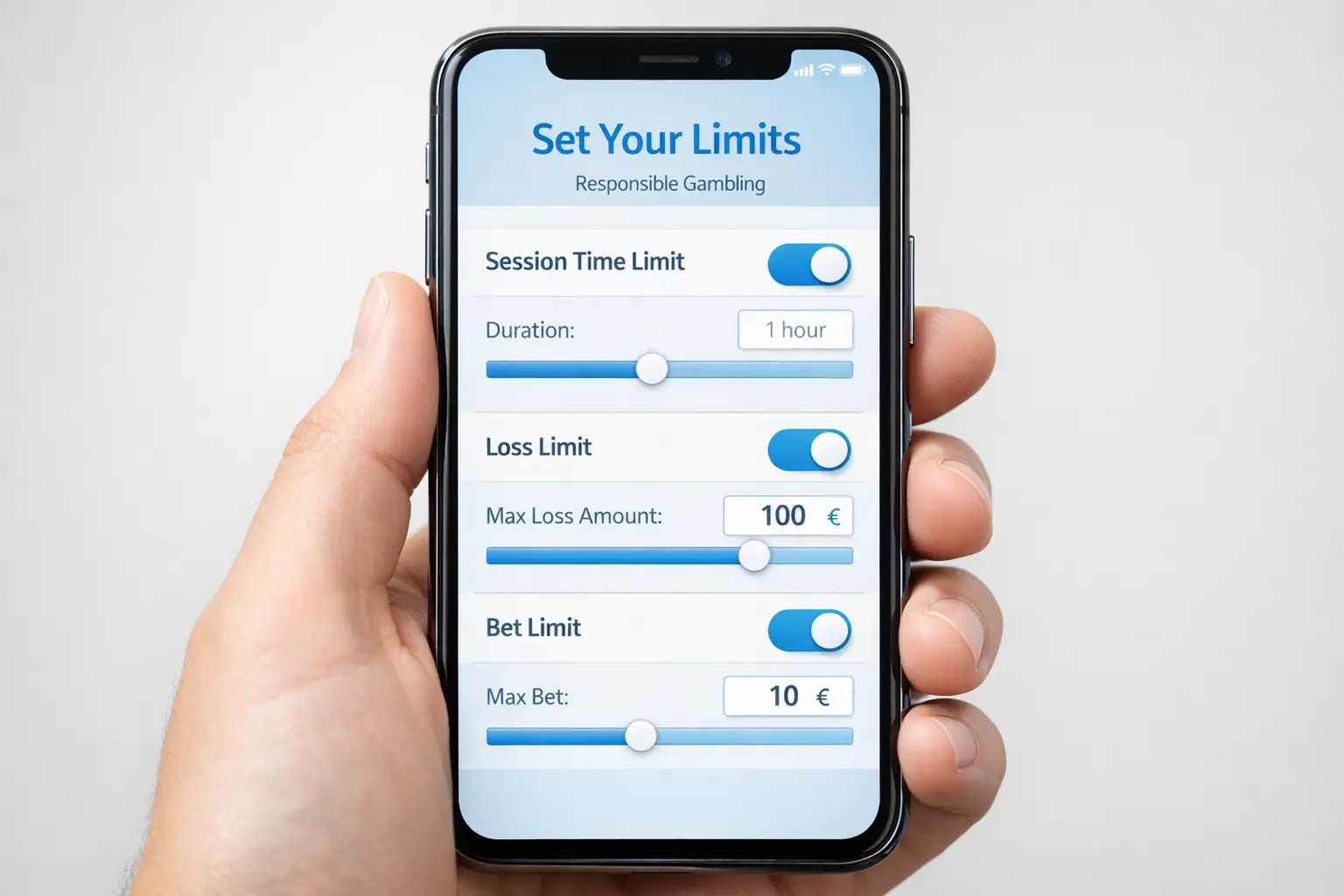
Live betting carries unique risks beyond standard sports betting. The speed and emotion of real-time wagering can override good judgment. Managing these risks protects your bankroll and keeps betting enjoyable.
Avoiding Emotional Decisions
The biggest risk in live betting is emotional betting. A goal against your pre-game pick triggers frustration, which triggers a live bet trying to “get it back.” This revenge betting rarely works and often compounds losses.
Recognize your emotional state before betting. If you’re frustrated, anxious, or desperate, you’re not in a position to make good decisions. Step away from the app, watch the game without betting, and wait until you’ve calmed down. The opportunity you’re worried about missing is rarely as good as your emotions suggest.
Having rules helps override emotions. Decide before games when you’ll bet live and when you won’t. Commit to sitting out certain situations regardless of how you feel. This structure protects you when your judgment is compromised by the heat of the moment.
Setting Loss Limits
Live betting can accelerate losses faster than pre-game betting because you can make multiple bets per game. A bad first period can lead to three or four losing bets before you’ve processed what’s happening. Setting firm limits on live betting losses prevents catastrophic sessions.
Decide before each game — or each day, or each week — how much you’re willing to lose on live betting specifically. When you hit that limit, stop. No exceptions, no rationalizations about the next bet being different. Limits only work if you follow them absolutely.
Some sportsbooks let you set session limits or cooling-off periods that automatically restrict your betting. These tools aren’t signs of weakness — they’re smart risk management. Use them if you find it hard to stop when you’ve planned to stop.
Waiting for the Right Spots
Not every game offers live betting value. Some games unfold exactly as expected, with the favorite building a lead and the market pricing outcomes efficiently throughout. Forcing live bets in these games loses money.
Patience is the hardest skill in live betting. Watching a game without betting feels passive, like you’re missing out. But the most profitable live bettors are selective, waiting for specific situations where they have genuine edge rather than betting every perceived opportunity.
Develop criteria for live betting spots and stick to them. Maybe you only bet live when a team you researched pre-game falls behind early. Maybe you only bet period totals during intermissions after you’ve assessed game flow. Whatever your criteria, having them prevents the aimless betting that drains bankrolls.
Sportsbooks Best for Live NHL Betting
Not all sportsbooks excel at live betting. Market depth, odds update speed, and interface quality vary significantly.
bet365 pioneered live sports betting and remains the industry standard. Their NHL live markets are extensive, maintaining options throughout games that other sportsbooks close. Odds update within seconds, and the platform handles high-traffic moments reliably.
DraftKings offers smooth live betting with intuitive navigation and quick bet acceptance. Their same game parlay builder works live, allowing you to combine updated props during games — functionality that’s rare and valuable.
FanDuel maintains robust live prop markets with competitive pricing. The app performance during live betting is excellent, with fast load times and reliable bet acceptance. Cash-out options are available on many live bets.
Building Your Live Betting Approach
Live betting isn’t for everyone. It requires watching games closely, making quick decisions, and maintaining discipline when the action encourages impulsiveness. But for bettors who enjoy the challenge, live betting offers opportunities that pre-game markets don’t.
Start small. Make live betting a supplement to your pre-game approach rather than a replacement. Identify specific situations where you feel confident in your live reads and focus there. Expand gradually as you learn what works and what doesn’t.
Track your live betting results separately from pre-game bets. You might discover that certain game situations or bet types suit you better than others. This information helps you refine your approach and focus on your most profitable spots.
The goal isn’t to bet every game live. It’s to recognize the moments when the market offers value and have the preparation and discipline to act on them. Those moments don’t come every night, but when they do, live betting turns watching hockey into something even more engaging — and potentially more profitable — than simply rooting for your pre-game picks.
Live betting on ice hockey at ice hockey bets.
