
NHL Period Betting: First, Second, and Third Period Wagering
 Available in US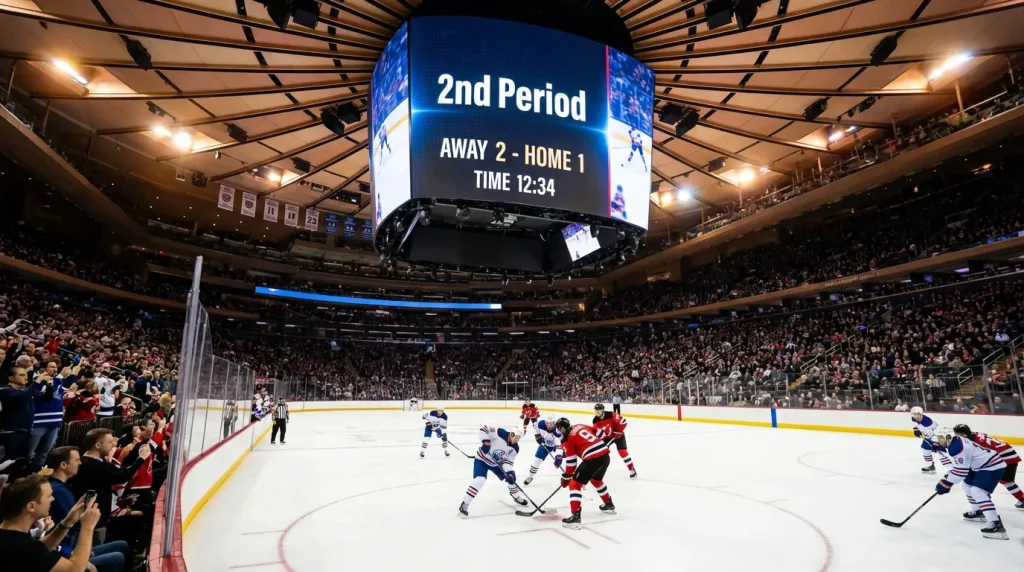
Most hockey bets treat a game as a single 60-minute block. You pick a winner, pick a total, maybe grab a player prop, and wait for the final horn. Period betting breaks that monolith into three separate chapters, each with its own character, its own scoring patterns, and its own market inefficiencies. The first period plays differently from the second, which plays differently from the third, and bettors who understand those differences have access to a market that the majority of casual wagerers don’t even know exists.
Period betting is also one of the thinnest markets in NHL wagering, which is precisely why it’s interesting. Lower betting volume means less market efficiency, which means the lines are more likely to be exploitable. Sportsbooks devote their sharpest pricing algorithms to moneylines and totals. Period markets often get less attention, set with broader margins and updated less frequently. For bettors willing to specialize, that relative neglect creates opportunities.
See also overtime and shootout rules.
How Period Bets Work
Period betting offers three primary bet types for each period: the period moneyline (which team will win that specific period), the period total (over/under goals scored in that period), and the period spread (typically 0.5 goals). Each period is treated as a standalone event — overtime does not apply to any period bet, and the result is determined solely by the goals scored within that 20-minute frame.
The period moneyline includes a third outcome that doesn’t exist in full-game betting: the draw. Since only 20 minutes of hockey are being played, a significant percentage of periods end with the same number of goals for each team. First periods end in a tie roughly 45-50% of the time, depending on the matchup. This means the draw is typically the shortest-priced option on the period moneyline, often around +200 to +230, while each team sits at +270 to +350. The presence of a third outcome fundamentally changes the math compared to a two-way full-game moneyline.
Period totals are set much lower than full-game totals — typically between 1.0 and 1.5 for any given period. The juice on these lines does most of the work, since there’s little room to move the number. An Over 1.5 at +120 and Under 1.5 at -150 is a common structure for first-period totals, reflecting the reality that most periods produce zero or one goal, with two-or-more-goal periods occurring maybe 35-40% of the time.
First Period: The Scouting Report
The first period in an NHL game is tactically distinct from the second and third. Coaches enter the game with a specific plan, and teams tend to play more structured, conservative hockey as they feel out their opponent. Line matching is at its most deliberate — home coaches use the last-change advantage to deploy their preferred defensive matchups — and both teams are at peak energy and focus.
Statistically, the first period produces the fewest goals of the three periods in a typical NHL season. The league-wide average hovers around 1.6 to 1.8 combined goals in the first period, compared to 1.8 to 2.0 in the second and 2.0 to 2.4 in the third (the third-period bump is partly inflated by empty-net goals). This scoring gradient means that first-period under bets carry a structural tailwind, but the lines account for this — you’ll rarely find first-period totals mispriced by a wide margin.
Where first-period betting gets interesting is in team-specific tendencies. Some teams are notorious fast starters — they score the opening goal at rates well above league average and dominate the first ten minutes with aggressive forechecking. Others are chronic slow starters who spend the first period absorbing pressure before finding their rhythm in the second. These tendencies are more persistent than many bettors realize. A team that’s been a strong first-period performer through 30 games is unlikely to suddenly become a slow starter, because the pattern reflects coaching philosophy and roster construction, not random variance.
Identifying first-period moneyline value requires comparing a team’s first-period win rate to the odds being offered. If a team wins the first period in 32% of its games but the first-period moneyline implies only a 25% chance, that’s a value discrepancy worth exploiting. The challenge is that sample sizes accumulate slowly — a team plays roughly 80 games in a season, and first-period outcomes across that sample may still be noisy. Waiting until at least 25-30 games into the season before relying heavily on period-specific data is a reasonable threshold.
Second Period: The Forgotten Middle
The second period is the least discussed and least bet period in hockey, and that anonymity is part of its appeal. It’s the period where game plans adjust based on first-period performance, where coaches make tactical corrections, and where the flow of the game often reveals its true character. The first period can be misleadingly structured; the third period is often distorted by score effects. The second period sits in between, offering what might be the most honest 20 minutes of hockey in the game.
Scoring rates in the second period typically fall between first and third-period averages, but the variation between matchups is wide. Games between two evenly matched teams tend to produce cautious second periods as both sides protect their first-period results. Games where one team holds a two-goal lead often see the leading team turtle slightly, reducing offensive aggression while the trailing team increases pressure — a dynamic that can produce goals in either direction.
Second-period betting is where matchup-specific analysis pays the highest dividends. The second period is when coaching adjustments from the first intermission take effect: line shuffles, defensive pair changes, and power play restructuring all show up in second-period performance. If you watched the first period and noticed that a team’s top line was being neutralized by a specific defensive pairing, second-period adjustments might free them — or the opposing coach might double down on what’s working. These chess moves aren’t visible in the odds, which are typically set by algorithm rather than by someone who watched the first 20 minutes with a scout’s eye.
Third Period: Score Effects and Desperation
The third period is where the game’s narrative reaches its climax, and the scoring data reflects that drama. Third-period scoring rates are the highest of the three periods, driven by two interrelated factors: score effects and empty-net situations.
Score effects refer to the behavioral changes that occur based on the current scoreline. A team trailing by one or two goals in the third period plays with measurably more offensive aggression — more shot attempts, more offensive zone time, more risky passes through the neutral zone. The leading team, meanwhile, shifts into a protective posture, collapsing into their own zone and prioritizing shot blocking over offensive generation. This dynamic produces a distinctive scoring pattern: the trailing team generates more chances but often can’t convert, and the leading team scores on counterattacks or empty-net opportunities.
Empty-net goals are the third period’s signature distortion. In roughly 30-35% of NHL games, the trailing team pulls its goaltender in the final two minutes, creating a six-on-five advantage that leads to goals in both directions. An empty-net goal for the leading team counts in the third-period total, which is why third-period overs hit at a higher rate than first or second-period overs. Understanding this dynamic is essential for pricing third-period totals: the over’s edge in the third period isn’t because teams play better hockey — it’s because the rules of the game fundamentally change in the final minutes.
Third-period moneylines are heavily influenced by the game score entering the period. If a team leads 3-1 after two periods, the third-period moneyline on the trailing team might be +150 to +180, reflecting the difficulty of overcoming a two-goal deficit in 20 minutes. But trailing teams do come back — not frequently, but often enough that these lines can offer value in specific situations. Teams with elite power plays, explosive top-six talent, and a history of third-period comebacks are the best candidates for third-period underdog plays.
Building a Period Betting Strategy
The most effective period betting strategies target specific, repeatable situations rather than attempting to bet every period of every game. The market is too thin and the margins too tight for a scattershot approach to work.
One productive angle is specializing in first-period totals for specific team matchups. Track which teams consistently produce high or low first-period scoring and cross-reference those tendencies when they face each other. Two strong first-period teams meeting head-to-head create an over-leaning first period, while two slow-starting teams generate an under-friendly environment. These tendencies are partially captured in the lines, but not always with sufficient precision.
Another angle is targeting second-period moneylines after watching the first period of a game. This is a hybrid of pre-game research and live betting — you form a thesis about a team’s overall quality before the game, then use first-period observations to refine your second-period play. If a team you like came out flat in the first period but is now expected to receive coaching adjustments that address the issue, the second-period moneyline may not reflect that anticipated improvement.
The Twenty Minutes Nobody Gameplans For
Period betting attracts less attention than full-game markets for a reason that also explains its value: it’s harder. Full-game outcomes smooth out the variance within a 60-minute contest. Period outcomes amplify it. A single goal in a 20-minute window can determine whether your bet wins or loses, and goals in hockey are inherently low-frequency, high-randomness events.
But difficulty and opportunity are close neighbors. The bettors who gravitate toward period markets tend to be more specialized and more analytically rigorous than the average moneyline bettor, and the sportsbooks that price period markets do so with less precision than they price full-game lines. This creates a quiet market where expertise is rewarded disproportionately and where casual bettors rarely show up to distort the odds. If full-game betting is the crowded main stage, period betting is the side room where the people who actually study the game’s internal rhythms find each other — and find value that the spotlight never reaches.
NHL period betting at ice hockey bets.
